Sneak peek: our new website is still being finished, so some details may change. Questions? Call or text 937-266-0370.
For more than a century, this building has stood on the north bank of the Great Miami River, looking south across the water at downtown Dayton. It has seen the city at its most inventive, its most devastated and its most determined. This is its story, and the story of the people who keep it alive.
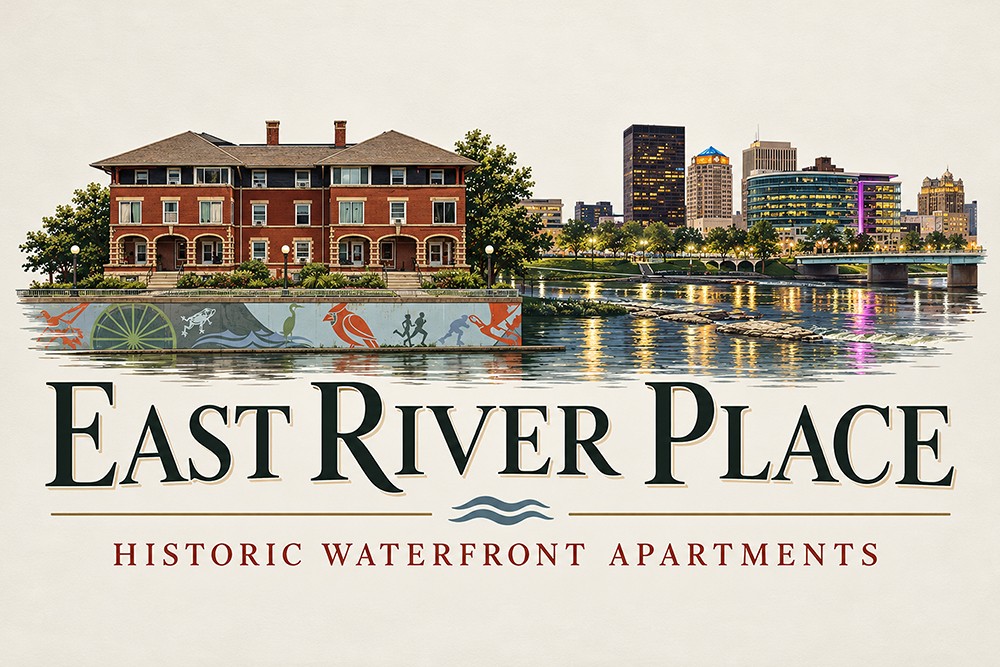
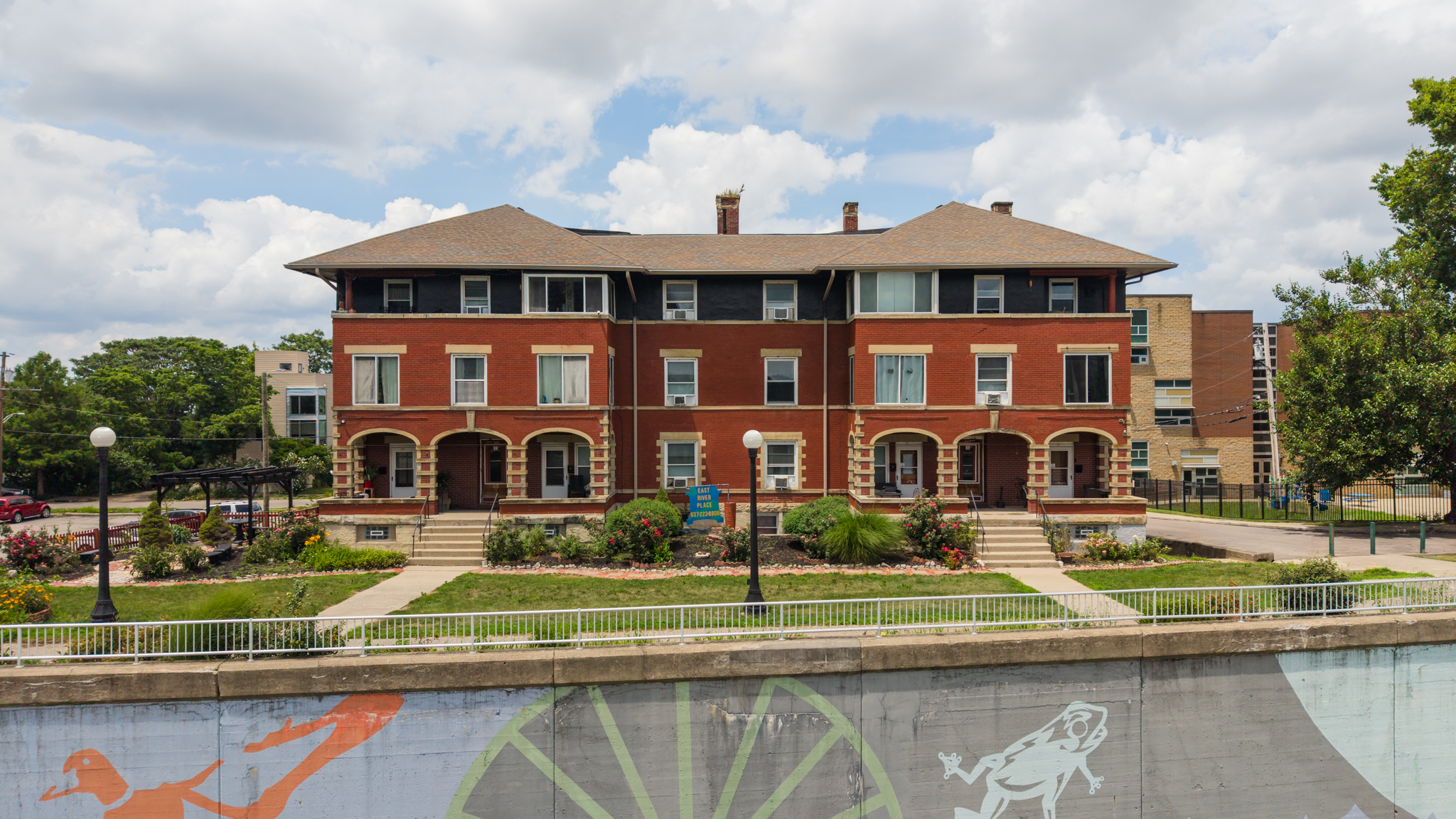
East River Place today, sitting right along the Great Miami River. The mural-painted wall in front of it is the same flood wall built in 1920.
In 1910, Dayton was one of the most inventive cities in America, and about 117,000 people called it home. On the river’s north bank, in the neighborhood now known as McPherson Town, a grand new building went up with 24 apartments and a front-row view of the city.
It has been apartments ever since, and home to Daytonians of every kind.
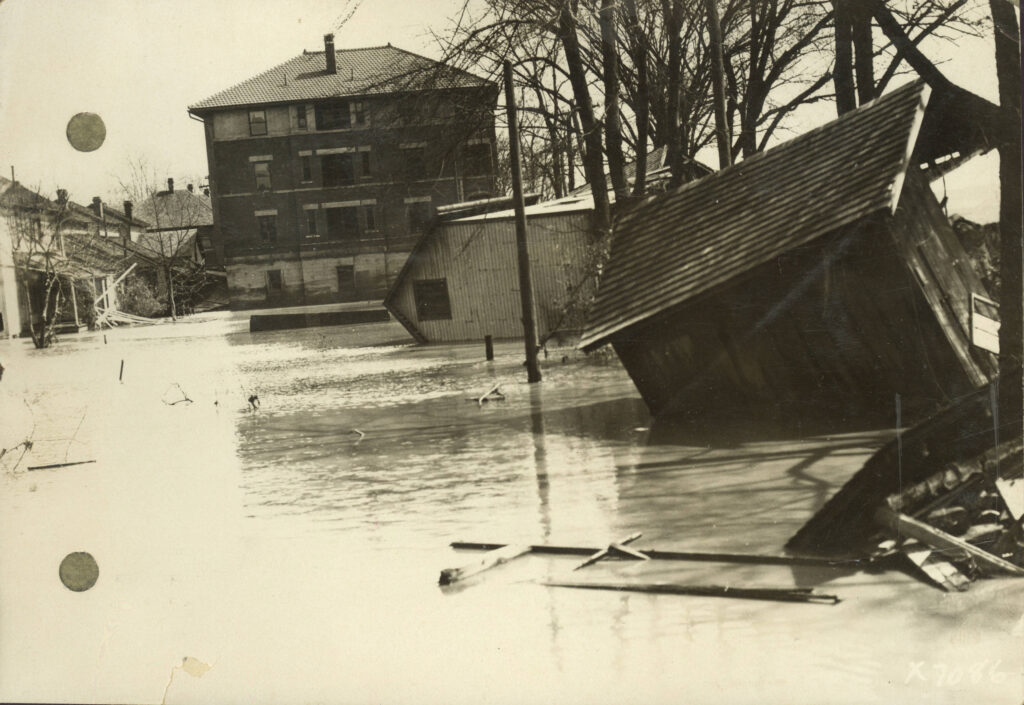
On Easter Sunday, March 23, 1913, rain began falling across the Miami Valley. Over five days, 8 to 11 inches fell. The Great Miami River rose almost two feet an hour, and on March 25 the levees gave way.
At least 92 people died in Dayton, about 65,000 were driven from their homes, and more than 1,000 homes were destroyed. McPherson Town, right on the river, was hit hard.
This building stood.
Dayton’s response became legendary. John H. Patterson turned his National Cash Register factory into a relief station and a boat yard, and more than 10,000 people were rescued.
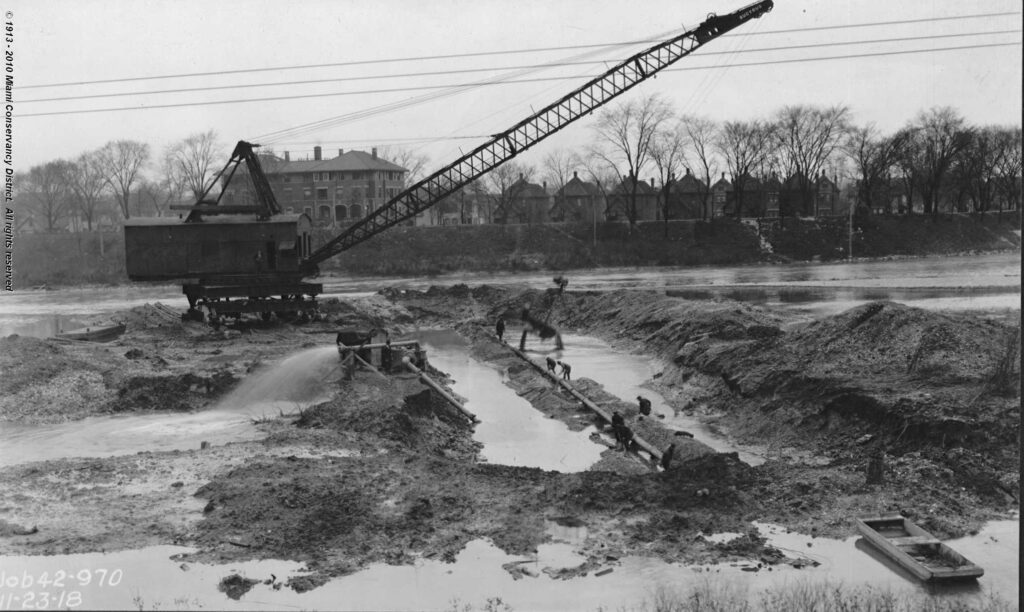
That was Dayton’s rallying cry after the flood. Citizens raised more than $2 million, and engineer Arthur Morgan designed a system of five dry dams, wider river channels and new levees. The Miami Conservancy District finished the work by 1922, and it has held back floodwater more than 2,000 times since.
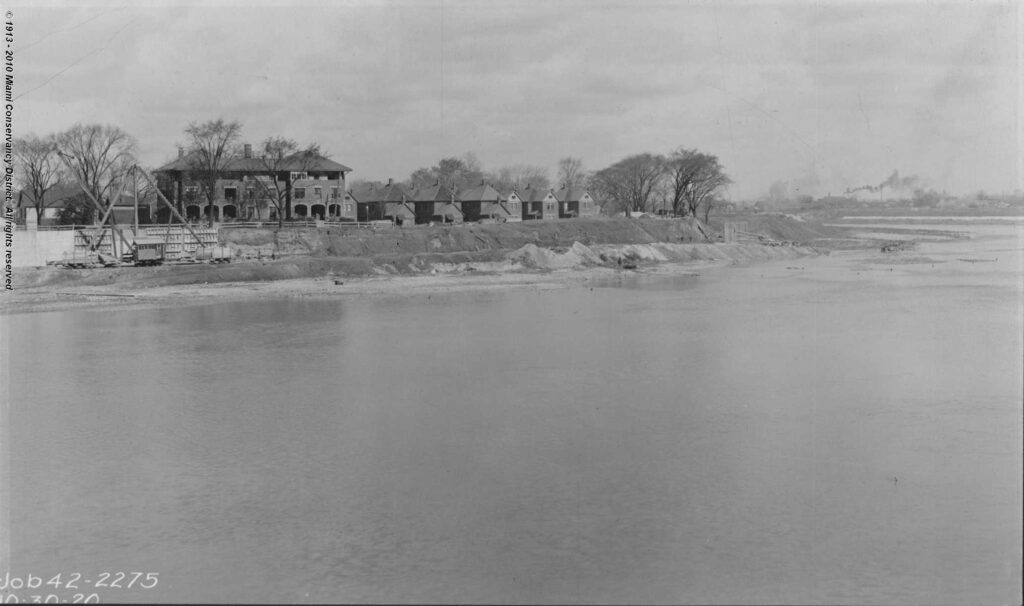
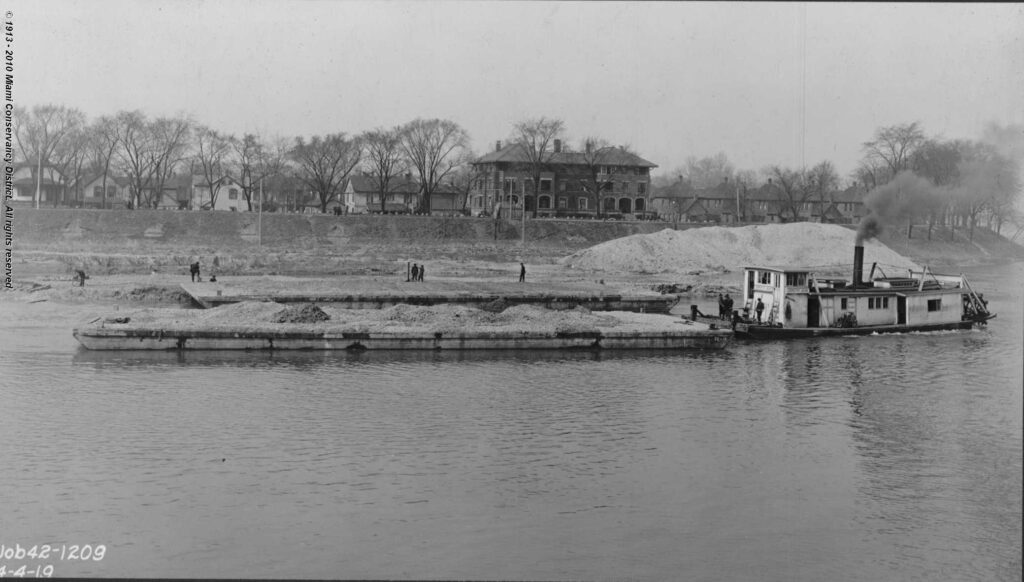
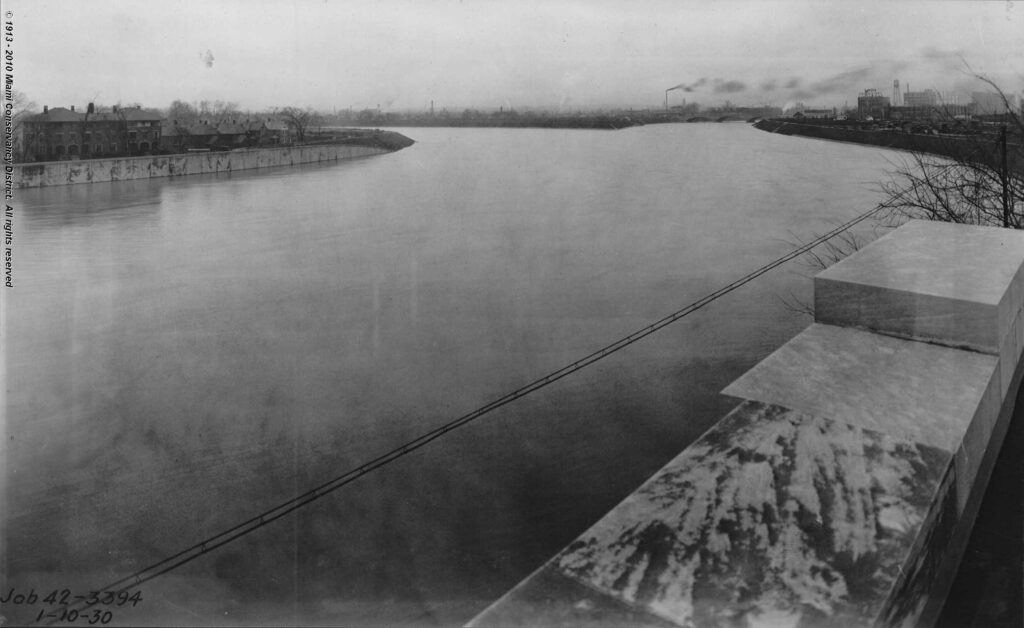
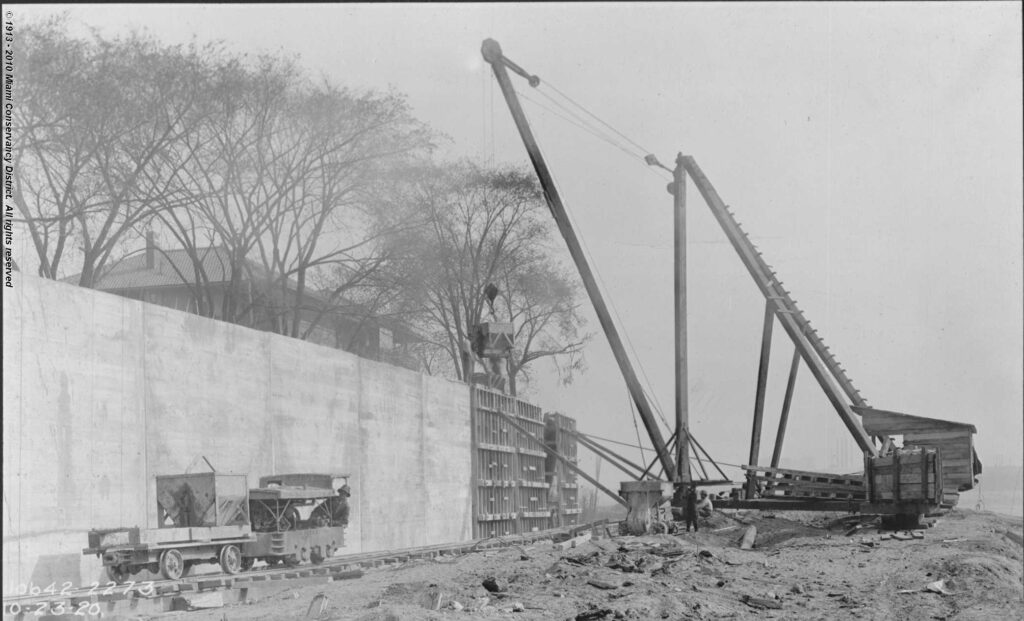
The flood wall in front of East River Place is part of that promise. Photos from around 1920 show it being built right at the building’s front door.
Built on the north bank of the Great Miami River with 24 apartments and a front-row view of downtown.
The Great Dayton Flood. Much of McPherson Town is destroyed. This building stands.
Ohio passes the Conservancy Act, and the Miami Conservancy District is born.
The flood wall goes up right in front of the building. Archival photos from October 1920 show the work underway.
Dayton’s flood protection system is finished. It has held back floodwater more than 2,000 times since.
McPherson Town is listed on the National Register of Historic Places.
Known as the Miami Apartments. [When it got that name, if known.]
Lisa Jackson and JR Wilson take over the building and rename it East River Place.
Restoration begins: a new roof, new windows, structural repairs and renovated apartments.
The Dayo, a garden pergola, and the outdoor firepit are built side by side in the sitting garden next to the building.
The basement becomes the Boom Boom Room, a gathering space for residents.
Two brand-new apartments are designed and added.
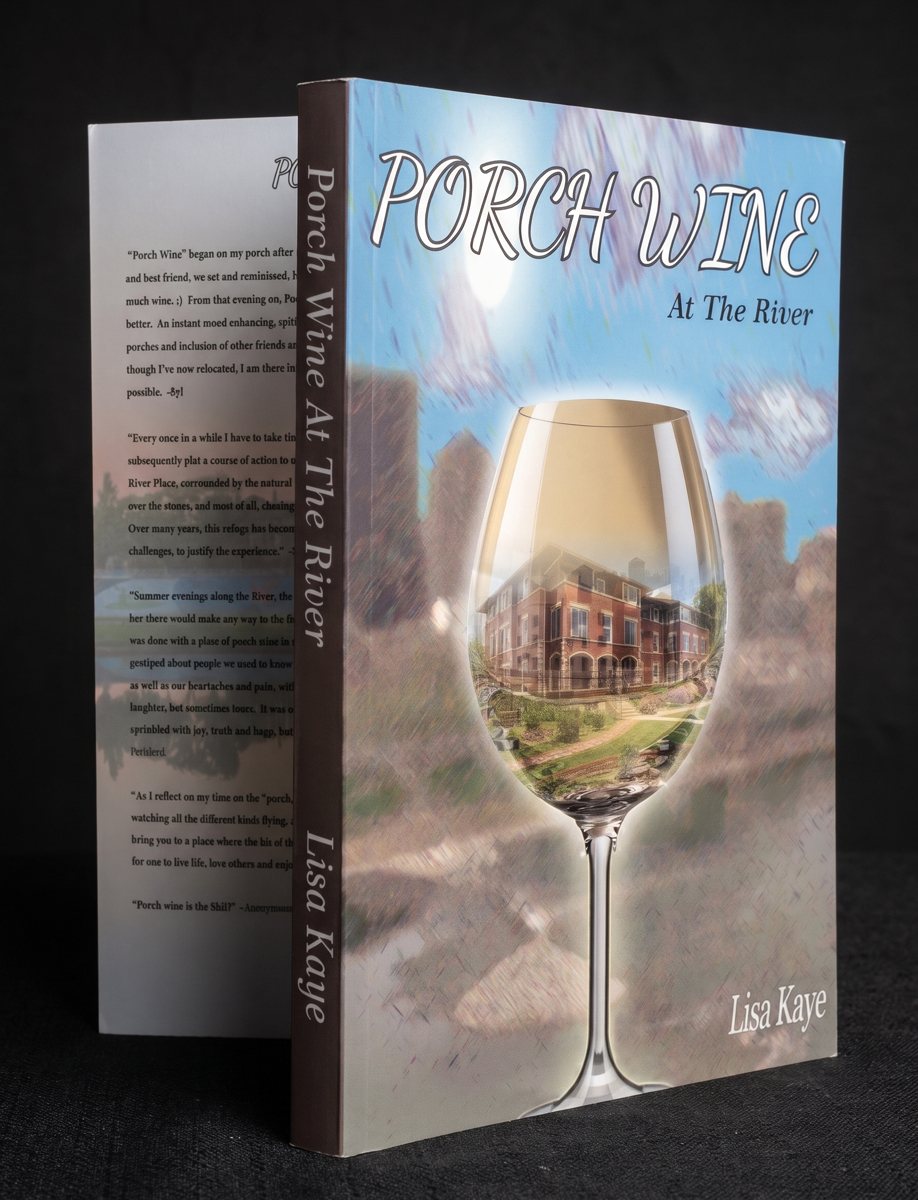
Lisa publishes Porch Wine at the River, stories inspired by the people of the building.
One-of-a-kind homes, one community, and the same view of the river.
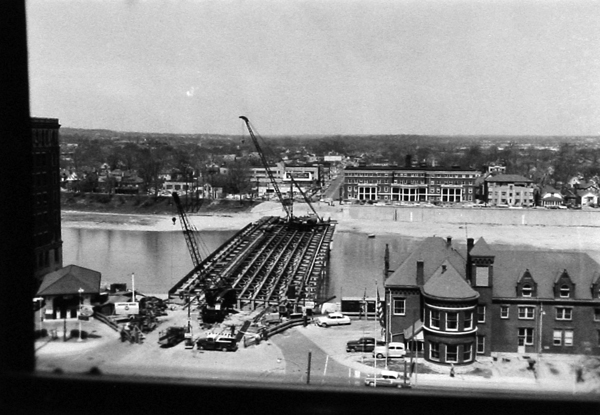
After the 1913 flood, the Miami Conservancy District rebuilt the riverbanks of Dayton. These photos show the work happening right outside the front door.
Flood-control photos courtesy of the Miami Conservancy District. Bridge photo source unknown.
For decades the building carried on as the Miami Apartments. Like a lot of downtown Dayton, it went through hard times. By the early 2000s the grandeur had faded and the building needed serious love, care and attention.
But the views never went anywhere, and neither did the bones.
Lisa Jackson and JR Wilson took over the building in 2004 and started restoring it in 2005. It has been a labor of love ever since: a new roof and new windows, structural repairs, modernized and renovated apartments, landscaping, and a thousand smaller improvements along the way.
Through conversion and renovation, the original 24 apartments grew into today’s one-of-a-kind homes. In 2018 the Dayo, a garden pergola, went up on the side of the building next to the firepit. In 2023 the basement became a gathering space residents affectionately call the Boom Boom Room, and two brand-new apartments were designed and added in 2023 and 2024.
They named it East River Place for the river out front, and for a favorite album, Stanley Clarke’s East River Drive.
Resilience is a Dayton habit. After the 2019 Memorial Day tornadoes and a very hard year, the city rallied around #DaytonStrong. East River Place carries the same spirit.
Over the years its residents have been artists, musicians, entrepreneurs, medical professionals, educators and just about every walk of life in between, and they keep finding each other here. Evenings on the front porches with wine, music, singing and long conversations. The firepit when the weather cools. Holiday gatherings. And, of course, the Boom Boom Room.
The best seat in the house? Any of the front porches or verandas, looking out over the Great Miami River, the rapids, the RiverScape pavilion and the ever-changing Dayton skyline.

“[Resident quote 1]”
[Name], resident since [year]
“[Resident quote 2]”
[Name], resident since [year]
“[Resident quote 3]”
[Name], resident since [year]
Downtown Dayton vibes, community events, happy hour at the river, and porch wine on the verandas and front porches.
Happy hour at the river, or a glass of wine on one of the verandas or front porches, with music, singing and long conversations. It is where Lisa’s book got its name.
Built in 2018, the Dayo garden pergola and the firepit beside it are where neighbors gather when the weather turns cool.
Every December, residents come together to kick off the season with food, drinks and good company.
Opened in 2023, the basement gathering space residents affectionately call the Boom Boom Room.
Around 1920: crews build the flood wall at the building’s front door. (Archival photo courtesy of the Miami Conservancy District)
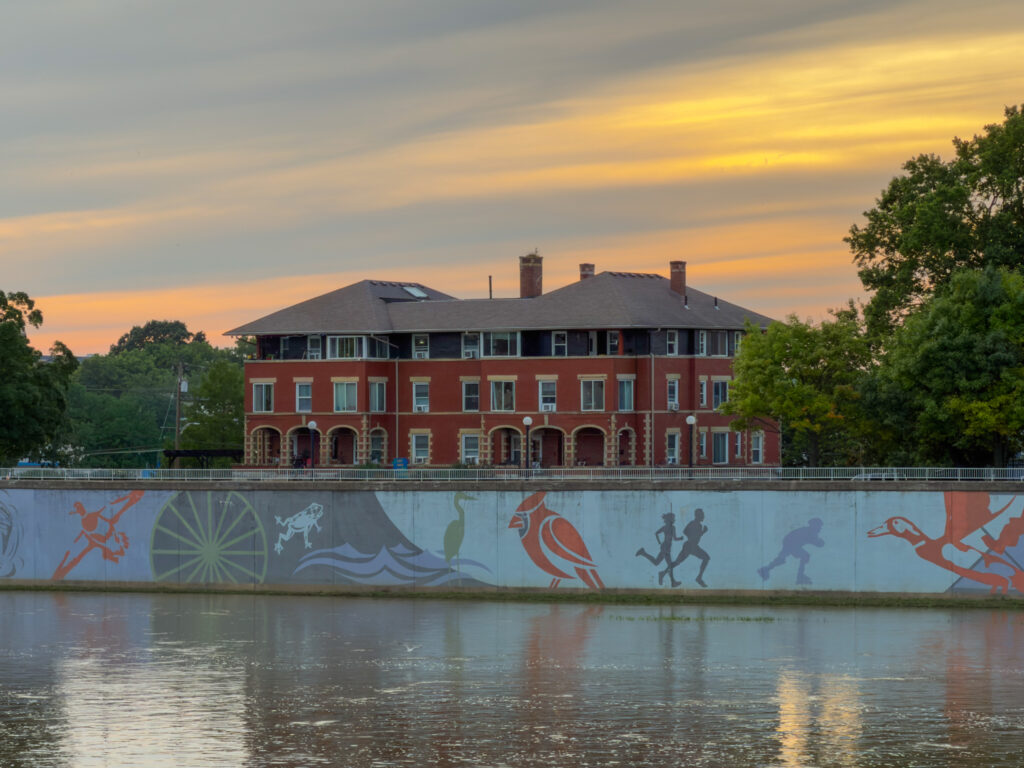
Today: the same wall, now painted with murals, below East River Place at sunset.
“[A few sentences from Lisa and JR in their own words: why they fell for this building, what it means to them, and what they hope new residents find here.]”
Lisa Jackson & JR Wilson
by Lisa Kaye
Many of this building’s real characters, from the late 1990s to today, loosely inspired the stories in Lisa’s book. Porch wine is a real tradition here. If you’ve ever wondered who lived down the hall, start here.
Tour the building, or join the waitlist for a river-view apartment.